By: Tatiana Quatrochi, Fall '24 Intern
At various stages of an athlete’s career, it is common for many of them to encounter an injury. Many injuries can be managed with little disturbance to their sport participation, however many cannot, and it leads to more than just physical recovery.
According to the
Washington Post, more than 5.2 million injuries occurred in high school athletes in the United States from 2015 to 2019. About 20% of these injuries led to high school athletes discontinuing participation in their sport for the season or longer.
Sport-related injuries not only take away the physical ability from the athlete but can also greatly impact their mental health. For Marlboro High School (Section IX) Ella Leduc, a former College of Saint Rose softball player, tearing her Anterior Cruciate Ligament (ACL) was a physical injury that led to lasting emotional and psychological impacts.
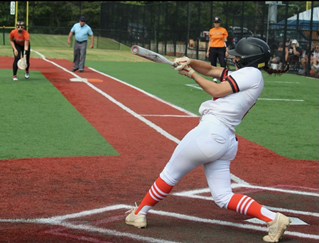
(Leduc is a graduate of Marlboro in Section IX.)
“I definitely saw a decline in mental health when I got injured and during my recovery process. I was feeling sad, useless, and a profound feeling of denial,” said Ella. “I overcame these feelings by using my knee rehab as my source of competition by competing with myself to become better and realizing I am more than just the sport I play. I learned to find different outlets like schoolwork and relationships to focus more of my attention on.”
By shifting her focus on her rehabilitation and personal relationships, she was able to exemplify resilience in the face of adversity. Boston Children’s Hospital cited that several studies have shown that injured athletes with higher levels of stress, anxiety, and fear of reinjury are less likely to fully recover. In one study of ACL reconstruction patients, those with higher levels of fear were 13 times more likely to suffer a second ACL tear within two years of returning to sports than those who were less fearful.
Basketball player, Jake Pampolina, currently a junior at Suffern High School (Section I), spoke about his experience while battling the mental health effects of sport related injuries.
“I feel like I’m letting my teammates down. The stress of not being there for my team hurts me more than the injury itself,” said Jake. “The pressure of your team expecting you to come back quickly and healthy creates a roadblock in recovery.”
Due to their younger age compared to college student-athletes, many high school athletes find it difficult to deal with their injuries. Many high school athletes do not know what to do during the healing process, which presents a challenge for them in their sport and recovery process. According to Mass
General Brigham, a significant portion of high school athletes experience mental health concerns following sports injuries with studies showing that up to 35% of athletes struggle with mental health issues.
For Jake, he takes more of a leadership role when injured to help cope with the negative effects that the injury has on his mental health. “I cope with the stress by becoming more of a vocal leader and giving tips to others on the court as if I was still leading them. This helps me know I’m still important to the team and helps with my mental health because I can still be a leader without being on the court.”
Similarly, White Plains High School (Section I) graduate and former Mount Saint Mary College lacrosse player Anthony Benavidez shared the same struggle after breaking his hand during his junior year.
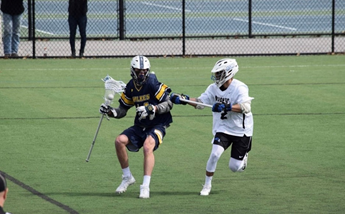
(Benavidez is a graduate of Section I school White Plains.)
“I felt useless not being to do anything with my team. I just stood on the sidelines, feeling like it was a wasted year with nothing to show for it,” said Anthony. “This was the year we went to the championship, the first time in our school’s lacrosse program history and I felt as if I was no help.”
It is critical for athletes going through the mental anguish of injuries to find ways to contribute to the team in order to maintain a sense of purpose and connection to the team. Anthony did just that by seeking out advice from his lacrosse coach.
“I spoke to my coach about it, and he got me more involved when it came to helping out with drills, breaking down film, and helping out team with things I could do without getting more hurt,” said Anthony. “It felt better for me to be there to help rather than not being part of what was going on.”
It is important that coaches, trainers, and team physicians help create a positive environment for all athletes that struggle with the mental health effect of injuries so that they can feel supported. Dylan Brickner, assistant strength and conditioning coach at Siena College, emphasized that.
“There is nothing wrong with the athlete as a person because they got injured. Often in sports, we tie our identities to our activity. When a person is no longer able to participate in what is at times a front to who they are as a person, it causes essentially what is an identity crisis, “said Dylan. “There’s a lot more to each of us than the sports we play. Sports is just a single aspect of who you are.”
Coaches, trainers, and team physicians need to create an environment that acknowledges both the physical and mental dimensions of sports. In doing so, athletes are able to navigate the complexities of injury with resilience, ensuring that they emerge from these challenges not just as athletes, but as individuals. If anxiety, depression and more intrusive thoughts persist, an athlete should immediately seek a medical health professional beyond school or teams they compete for.
Many high school state associations across the country promote mental health and the tools to help student-athletes get through. At the New York State Public High School Athletic Association (NYSPHSAA), Mental Health Week is in May every year where the association has a daily task for its member schools to promote in helping athletes. NYSPHSAA also promotes courses, statistics and other activities for teams to engages in during that week.
According to the
Los Angeles Times High School Insider, in October 2023, Ohio passed state legistlation with the intent to aid high school athletes with mental health struggles.
Ohio law now requires all athletic coaches to complete a student
mental health training course approved by the Ohio Department of Mental Health and Addiction Services. The new law aims to give Ohio high school athletics coaches the tools they need to help student athletes struggling with mental health.
NYSPHSAA and Ohio are just examples of the efforts being made to address the mental challenges for injured student-athletes. Colleges and high schools continue to implement strategies and protocols to keep athletes in a good positive state. Team activities and individual activities with affected athletes are being blended to enhance and expedite the return to play.